Aromatic
Leather
Woody
Top Notesdavanafreesiaviolet leaf
Heartdateshaylabdanumlovagemineral accordnarcissussea salt
Base Notesatlas cedarwoodcedarwoodoakopoponaxpatchoulivetiver
Tags
#fresh
#smoky
Style
unisex
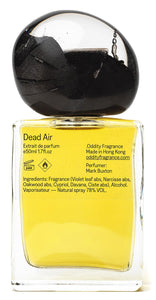
Macabre fantasy of decadent shadows and drama, unfolding from a fresh salty breeze to the deep dark underwater with blurry black tones, exuberant flora and a binding touch of wood.
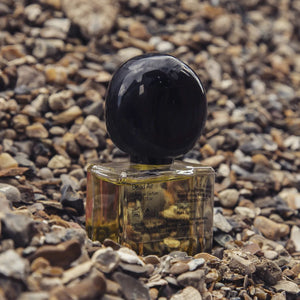
Lids for Dead Air are made by hand from imperfectly beautiful charcoal encapsulated in epoxy resin resulting in unique shapes and shades, each is one of a kind — a true masterpiece.
Master perfumer
Mark Buxton
All about this fragrance
Vibe check
Dead Air suits close, low-lit spaces where its salty opening and smoky depth can unfold without feeling loud. It has the mood of someone moving through a room with deliberate calm, leaving behind a cool mineral trace, dark wood and a faint floral blur rather than a conventional perfume cloud.
How to wear
Best in cool weather or evening air, Dead Air benefits from moderate application so its saline top and woody, smoky base stay legible. On skin it moves from breezy and mineral to darker, drier woods; in humid heat it can feel more shadowy and diffusive, so a lighter hand works best.
Who it’s for
For wearers who like conceptual niche scents with a salty-woody profile, smoky texture and an offbeat floral edge. It will appeal to those drawn to atmospheric, slightly austere perfumes that feel artistic, dark and unisex rather than smooth or conventional.
Release year
2022
The nose
Mark Buxton is a British-born perfumer known for sharp, modern compositions that often balance clarity with tension: airy notes against smoke, woods, leather, spice or metallic facets. His work has made him a familiar name in niche perfumery, where he is valued for fragrances that feel conceptual without losing wearability. For Dead Air, Buxton translates Oddity’s macabre brief into a saline, shadowed composition that moves from brightness into depth. The result fits his signature style well: a clean structural opening, an unusual textural heart, and a dry, atmospheric finish that lingers like a scene rather than a simple accord.
Collaborators
Oddity’s creative team shaped Dead Air as part of a story-led project, developing the fragrance from original written narratives into visuals and then into scent. Their role was to define the macabre, theatrical concept that Buxton translated into the final composition.
Oddity’s story
Oddity is a Hong Kong-based niche perfume house that treats fragrance as a multidisciplinary art form, combining storytelling, visual identity and perfumery. Its releases are concept-driven and deliberately expressive, with an emphasis on atmosphere, materiality and narrative rather than conventional crowd-pleasing polish.
Dead Air’s concept
Dead Air was created as part of Oddity’s story-based collection, where original written narratives were first turned into visuals and then interpreted by perfumer Mark Buxton. The official concept frames it as a macabre fantasy: a salty breeze giving way to deep underwater darkness, black tones, flora and wood. The bottle’s handmade charcoal resin cap extends that idea into the object itself.
Extra info
Dead Air is an extrait de parfum launched in 2022 and presented in a 50 ml bottle. Its handmade cap is made from charcoal encapsulated in epoxy resin, so each one has a unique shape and finish. Oddity describes it as the most controversial perfume in the collection.
Featured in edits and sample packs
Stormy Skies & Wet Earth
PRE-ORDER
£170.00, 50 ml Extrait de Parfum
PRE-ORDER
£32.00, 10 ml Extrait de Parfum
Top Notesdavanafreesiaviolet leaf
Heartdateshaylabdanumlovagemineral accordnarcissussea salt
Base Notesatlas cedarwoodcedarwoodoakopoponaxpatchoulivetiver
Tags
#fresh
#smoky
Style
unisex
Macabre fantasy of decadent shadows and drama, unfolding from a fresh salty breeze to the deep dark underwater with blurry black tones, exuberant flora and a binding touch of wood.
Lids for Dead Air are made by hand from imperfectly beautiful charcoal encapsulated in epoxy resin resulting in unique shapes and shades, each is one of a kind — a true masterpiece.
Master perfumer
Mark Buxton
All about this fragrance
Vibe check
Dead Air suits close, low-lit spaces where its salty opening and smoky depth can unfold without feeling loud. It has the mood of someone moving through a room with deliberate calm, leaving behind a cool mineral trace, dark wood and a faint floral blur rather than a conventional perfume cloud.
How to wear
Best in cool weather or evening air, Dead Air benefits from moderate application so its saline top and woody, smoky base stay legible. On skin it moves from breezy and mineral to darker, drier woods; in humid heat it can feel more shadowy and diffusive, so a lighter hand works best.
Who it’s for
For wearers who like conceptual niche scents with a salty-woody profile, smoky texture and an offbeat floral edge. It will appeal to those drawn to atmospheric, slightly austere perfumes that feel artistic, dark and unisex rather than smooth or conventional.
Release year
2022
The nose
Mark Buxton is a British-born perfumer known for sharp, modern compositions that often balance clarity with tension: airy notes against smoke, woods, leather, spice or metallic facets. His work has made him a familiar name in niche perfumery, where he is valued for fragrances that feel conceptual without losing wearability. For Dead Air, Buxton translates Oddity’s macabre brief into a saline, shadowed composition that moves from brightness into depth. The result fits his signature style well: a clean structural opening, an unusual textural heart, and a dry, atmospheric finish that lingers like a scene rather than a simple accord.
Collaborators
Oddity’s creative team shaped Dead Air as part of a story-led project, developing the fragrance from original written narratives into visuals and then into scent. Their role was to define the macabre, theatrical concept that Buxton translated into the final composition.
Oddity’s story
Oddity is a Hong Kong-based niche perfume house that treats fragrance as a multidisciplinary art form, combining storytelling, visual identity and perfumery. Its releases are concept-driven and deliberately expressive, with an emphasis on atmosphere, materiality and narrative rather than conventional crowd-pleasing polish.
Dead Air’s concept
Dead Air was created as part of Oddity’s story-based collection, where original written narratives were first turned into visuals and then interpreted by perfumer Mark Buxton. The official concept frames it as a macabre fantasy: a salty breeze giving way to deep underwater darkness, black tones, flora and wood. The bottle’s handmade charcoal resin cap extends that idea into the object itself.
Extra info
Dead Air is an extrait de parfum launched in 2022 and presented in a 50 ml bottle. Its handmade cap is made from charcoal encapsulated in epoxy resin, so each one has a unique shape and finish. Oddity describes it as the most controversial perfume in the collection.
Featured in edits and sample packs
Stormy Skies & Wet Earth