Floral
Woody
Notesalmondamberambroxanbergamotcandy flosscoconutlabdanumlemonpatchoulirose
Tags
#fresh
#powdery
#sexy
Style
unisex
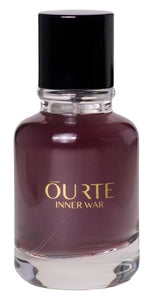
The never-ending war between what you “should” do and what you want to do. Where being loyal to your dreams and desires clashes with societal expectations. Well, here’s where the conflict ends. Inner War is an amber carnival of too-muchness, a stop at the candy floss stand, a ravenous kiss on the big wheel. This extrait is a billowing cloud of talcum powder and almond, suggesting delicate heliotrope. Curling like tendrils into the air is a phantom, licorice-like anise, adding freshness and subtle weirdness. Rose supplies the syrupy “mmmmm” that glues together ambroxan, vanilla and patchouli.
All about this fragrance
Vibe check
This is the kind of fragrance that works when you want your presence to feel intimate but not quiet: close, warm and slightly unruly, with a soft sweetness that lingers in the air. It suits evenings that begin in private and spill outward, when the mood is reflective but the energy is still charged.
How to wear
Best worn in cooler weather or in air-conditioned spaces, where its powdery sweetness and amber base can unfold without becoming heavy. One to three sprays is enough; on skin it reads soft and creamy, while in the air it leaves a gentle, sensual trail with a touch of resinous depth.
Who it’s for
For wearers who like gourmand fragrances with a more textured, grown-up edge: candy sweetness, powder, almond and amber rather than syrup alone. It will appeal to those who enjoy soft sensuality, a slightly strange floral heart and a fragrance that feels plush, modern and unafraid of excess.
The nose
Maud Chabanis is credited with Inner War, a composition that leans into contrast rather than polish: airy sweetness against resin, powder against warmth, tenderness against tension. The result fits a contemporary gourmand approach that uses familiar notes, but pushes them into a more textured, slightly off-kilter register. Her work here suggests a taste for atmosphere and emotional framing as much as structure. Inner War reads as a fragrance built around movement and friction, with the perfumer using cotton candy, almond, rose and amber materials to create a scent that feels both playful and inward-looking.
Ourte’s story
Ourte presents fragrance as a psychological and emotional exercise, with compositions built around inner tension, desire and self-definition. The house’s language is direct and conceptual, but the scent itself translates that idea into a lush, tactile style that favours excess, texture and sensual contrast.
Inner War’s concept
Inner War is built around the idea of the conflict between duty and desire, turning that tension into an amber gourmand with a rebellious streak. The brand frames it as a journey through an inner battle, while third-party descriptions cast it as a carnival-like excess of candy floss, powder and resinous warmth.
Extra info
Inner War is an extrait de parfum and remains in production. Its name and concept are tied to the idea of an internal conflict between what one should do and what one wants to do, and the scent’s candy-floss-and-amber profile gives that idea a vivid, almost theatrical form.
Notesalmondamberambroxanbergamotcandy flosscoconutlabdanumlemonpatchoulirose
Tags
#fresh
#powdery
#sexy
Style
unisex
The never-ending war between what you “should” do and what you want to do. Where being loyal to your dreams and desires clashes with societal expectations. Well, here’s where the conflict ends. Inner War is an amber carnival of too-muchness, a stop at the candy floss stand, a ravenous kiss on the big wheel. This extrait is a billowing cloud of talcum powder and almond, suggesting delicate heliotrope. Curling like tendrils into the air is a phantom, licorice-like anise, adding freshness and subtle weirdness. Rose supplies the syrupy “mmmmm” that glues together ambroxan, vanilla and patchouli.
All about this fragrance
Vibe check
This is the kind of fragrance that works when you want your presence to feel intimate but not quiet: close, warm and slightly unruly, with a soft sweetness that lingers in the air. It suits evenings that begin in private and spill outward, when the mood is reflective but the energy is still charged.
How to wear
Best worn in cooler weather or in air-conditioned spaces, where its powdery sweetness and amber base can unfold without becoming heavy. One to three sprays is enough; on skin it reads soft and creamy, while in the air it leaves a gentle, sensual trail with a touch of resinous depth.
Who it’s for
For wearers who like gourmand fragrances with a more textured, grown-up edge: candy sweetness, powder, almond and amber rather than syrup alone. It will appeal to those who enjoy soft sensuality, a slightly strange floral heart and a fragrance that feels plush, modern and unafraid of excess.
The nose
Maud Chabanis is credited with Inner War, a composition that leans into contrast rather than polish: airy sweetness against resin, powder against warmth, tenderness against tension. The result fits a contemporary gourmand approach that uses familiar notes, but pushes them into a more textured, slightly off-kilter register. Her work here suggests a taste for atmosphere and emotional framing as much as structure. Inner War reads as a fragrance built around movement and friction, with the perfumer using cotton candy, almond, rose and amber materials to create a scent that feels both playful and inward-looking.
Ourte’s story
Ourte presents fragrance as a psychological and emotional exercise, with compositions built around inner tension, desire and self-definition. The house’s language is direct and conceptual, but the scent itself translates that idea into a lush, tactile style that favours excess, texture and sensual contrast.
Inner War’s concept
Inner War is built around the idea of the conflict between duty and desire, turning that tension into an amber gourmand with a rebellious streak. The brand frames it as a journey through an inner battle, while third-party descriptions cast it as a carnival-like excess of candy floss, powder and resinous warmth.
Extra info
Inner War is an extrait de parfum and remains in production. Its name and concept are tied to the idea of an internal conflict between what one should do and what one wants to do, and the scent’s candy-floss-and-amber profile gives that idea a vivid, almost theatrical form.