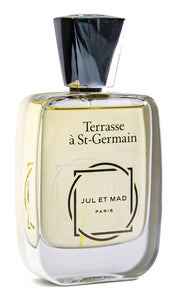
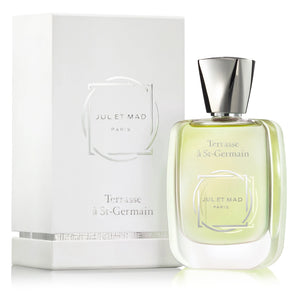
This item is permanently unavailable and will not be coming back in stock.Read more
The following are some reasons why perfumes can become unavailable:
Each year, the International Fragrance Association (IFRA) issues ever-stricter safety and allergen regulations. This affects quite a few classic formulas as well as niche compositions, and sometimes brands have to discontinue a perfume if they are unable to reformulate.
The brand decides to change the concentration. For example, an eau de parfum is reformulated as an extrait, effectively turning it into a different perfume.
The brand ceases operating. The creative director passed away, got bored, started a new project, sold the business, etc.
The brand cannot keep up with logistics and production demands, with disruptions for up to a year. If there is no regular production and availability schedule, it is not viable for a stockist to carry the brand.
The brand changed the distribution model, eg from niche to duty free.
A perfume as elegant as it is sophisticated. The composition is a complex blend of splendid wood and musk accord, gracefully embracing its initial freshness. This perfume encapsulates a perfect duality of classical and modern modes. Masculine and feminine, strangely familiar but also extraordinary!
This is the scent of close conversation at a small table, where the air is bright but not loud and every movement feels composed. It suits someone who wants a polished, quietly magnetic presence: fresh at first, then softly woody and musky as the evening settles in.
How to wear
Best in mild to cool weather, where its grapefruit lift and transparent woods can stay crisp without turning heavy. As an extrait, it is worth applying sparingly; one or two sprays are enough to create a smooth, intimate trail that sits close to the skin and lasts well.
Who it’s for
For wearers who like clean but not sterile compositions, with a transparent woody structure, soft musk and a refined citrus opening. It will appeal to those who enjoy elegant unisex fragrances that feel polished, modern and understated rather than sweet or overtly floral.
Release year
2012
The nose
Dorothée Piot is a French perfumer known for refined, textural compositions that often balance clarity with sensual depth. Her work spans niche and luxury perfumery, where she is valued for elegant structures, polished musks and woods, and a restrained but expressive style. For Jul et Mad, she shaped Terrasse à St-Germain as a fragrance of duality: fresh yet enveloping, classical yet modern. The composition reflects her ability to build a transparent architecture without losing warmth, letting the grapefruit opening, floral transparency and woody-musky base feel seamless rather than contrasted.
Collaborators
Julien Blanchard and Madalina Stoica-Blanchard briefed multiple perfumers on their personal love story and selected the final version through blind testing, actively shaping the fragrance’s emotional direction and ensuring it matched their intended Parisian romance.
Jul Et Mad’s story
Jul et Mad Paris approaches perfumery as personal storytelling, with each fragrance built as a chapter in an intimate love narrative. The house favors high concentrations, rare materials, and luxurious presentation, while rejecting mass-market formulas, celebrity-led promotion and rigid gender coding in favor of uncompromising niche craftsmanship.
Terrasse à St-Germain’s concept
Terrasse à St-Germain was created in 2012 as the second chapter of Jul et Mad’s Histoire d’Amour trilogy. Inspired by the founders’ coup de foudre on a Paris café terrace, it translates that instant of attraction into a polished floral-woody-musky composition that feels both intimate and distinctly Parisian.
Extra info
Part of Jul et Mad’s Histoire d’Amour trilogy, Terrasse à St-Germain was conceived as a fragrance chapter rather than a standalone concept. It is also one of the house’s early signature releases, and the brand’s own presentation frames it as a study in classical-modern duality.
A perfume as elegant as it is sophisticated. The composition is a complex blend of splendid wood and musk accord, gracefully embracing its initial freshness. This perfume encapsulates a perfect duality of classical and modern modes. Masculine and feminine, strangely familiar but also extraordinary!
This is the scent of close conversation at a small table, where the air is bright but not loud and every movement feels composed. It suits someone who wants a polished, quietly magnetic presence: fresh at first, then softly woody and musky as the evening settles in.
How to wear
Best in mild to cool weather, where its grapefruit lift and transparent woods can stay crisp without turning heavy. As an extrait, it is worth applying sparingly; one or two sprays are enough to create a smooth, intimate trail that sits close to the skin and lasts well.
Who it’s for
For wearers who like clean but not sterile compositions, with a transparent woody structure, soft musk and a refined citrus opening. It will appeal to those who enjoy elegant unisex fragrances that feel polished, modern and understated rather than sweet or overtly floral.
Release year
2012
The nose
Dorothée Piot is a French perfumer known for refined, textural compositions that often balance clarity with sensual depth. Her work spans niche and luxury perfumery, where she is valued for elegant structures, polished musks and woods, and a restrained but expressive style. For Jul et Mad, she shaped Terrasse à St-Germain as a fragrance of duality: fresh yet enveloping, classical yet modern. The composition reflects her ability to build a transparent architecture without losing warmth, letting the grapefruit opening, floral transparency and woody-musky base feel seamless rather than contrasted.
Collaborators
Julien Blanchard and Madalina Stoica-Blanchard briefed multiple perfumers on their personal love story and selected the final version through blind testing, actively shaping the fragrance’s emotional direction and ensuring it matched their intended Parisian romance.
Jul Et Mad’s story
Jul et Mad Paris approaches perfumery as personal storytelling, with each fragrance built as a chapter in an intimate love narrative. The house favors high concentrations, rare materials, and luxurious presentation, while rejecting mass-market formulas, celebrity-led promotion and rigid gender coding in favor of uncompromising niche craftsmanship.
Terrasse à St-Germain’s concept
Terrasse à St-Germain was created in 2012 as the second chapter of Jul et Mad’s Histoire d’Amour trilogy. Inspired by the founders’ coup de foudre on a Paris café terrace, it translates that instant of attraction into a polished floral-woody-musky composition that feels both intimate and distinctly Parisian.
Extra info
Part of Jul et Mad’s Histoire d’Amour trilogy, Terrasse à St-Germain was conceived as a fragrance chapter rather than a standalone concept. It is also one of the house’s early signature releases, and the brand’s own presentation frames it as a study in classical-modern duality.